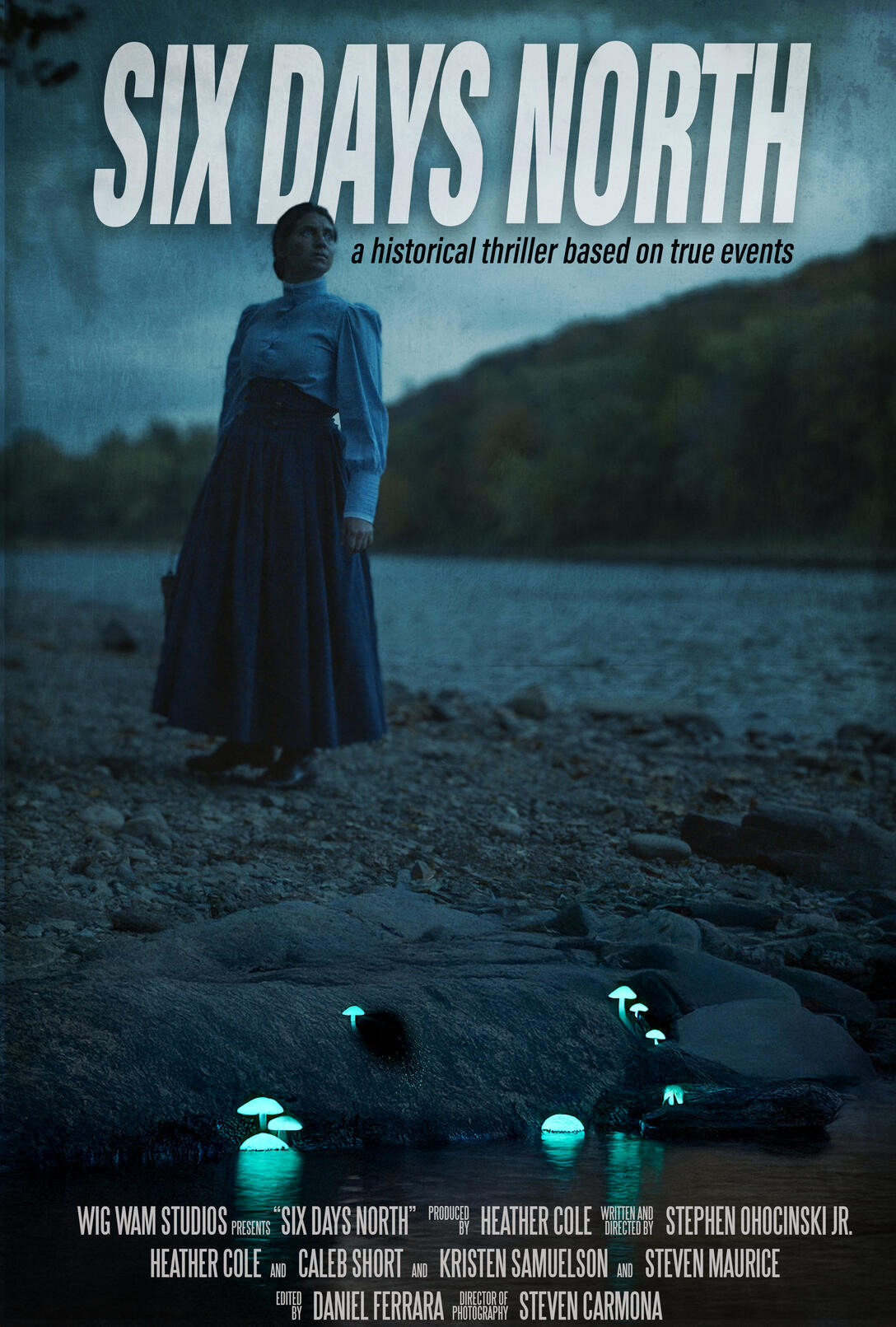
SIX DAYS NORTH
In the quiet aftermath of the American Civil War, a young woman living on a remote farm shelters a wounded Confederate soldier who arrives from a battlefield six days north. As his injuries begin to glow and unseen voices follow him into the night, it becomes clear that he has not come alone. Six Days North is a Southern Gothic ghost story about the cost of survival, the souls left behind by war, and the terrible consequences of refusing to listen—both to the living and the dead.
Six Days North began as a fascination with a real phenomenon reported during the Civil War—wounded soldiers whose injuries appeared to glow in the dark. Rather than treating that image as a miracle, I was drawn to it as a question: what happens to people who survive violence, but do not survive themselves?This film is not about the battle. It is about the aftermath—the silence that follows, the things left unfinished, and the cost of refusing to listen. Clyde believes the voices around him are tormenting him, when in truth they are trying to tell him what he cannot accept. The Union soldier believes he is fighting for freedom, only to realize that victory has asked something of his soul. Ellen stands between them, inheriting the consequences of both.I wanted the supernatural elements to feel intimate and uneasy, never grand. The whispers are not evil; they are desperate. The glow is not salvation; it is a mark. War, in this story, does not end when the fighting stops—it lingers, transfers, and demands to be acknowledged.Six Days North is a ghost story about survival, guilt, and the terrible price of not listening—until it is too late